

What Are RHRFs?
OVERVIEW
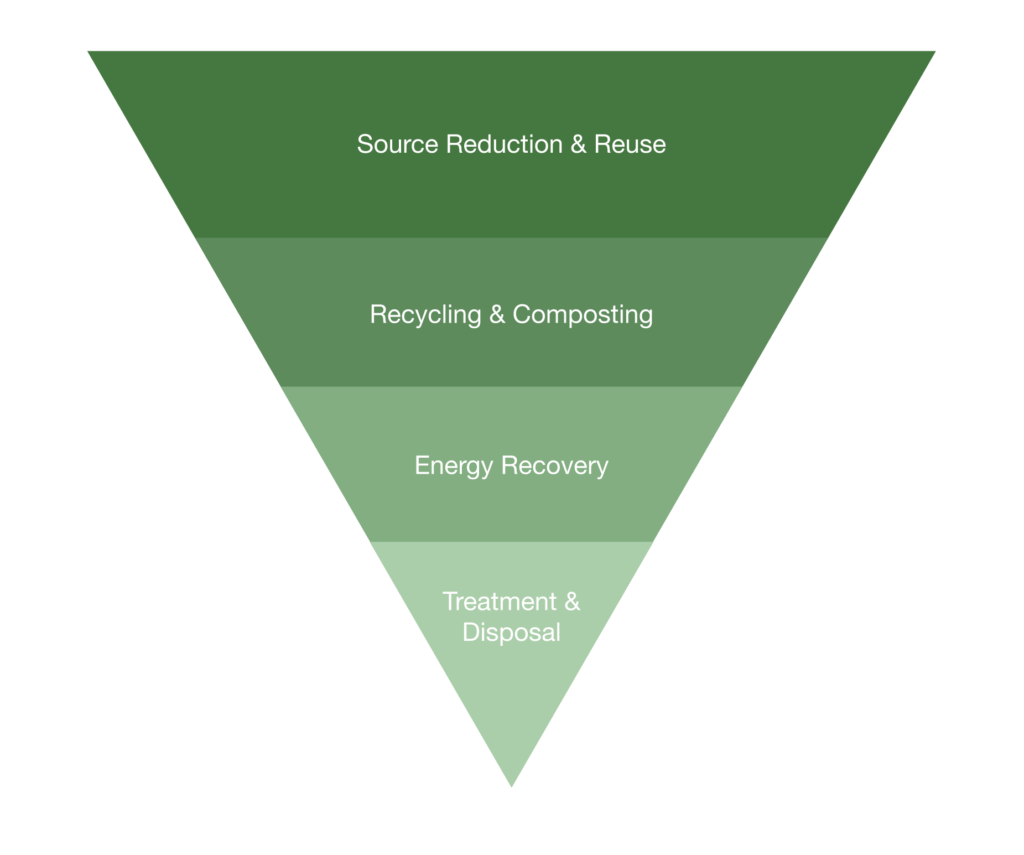
EPA Waste Hierarchy
In the United States, states and counties follow the Environment Protection Agency’s (EPA) waste management hierarchy as a guide for managing waste, ranking options from the most environmentally sound to the least. This hierarchy prioritizes starting with reduction at source, reusing resources, recycling materials, incineration with energy recovery, and then landfilling as the least preferred.[1]
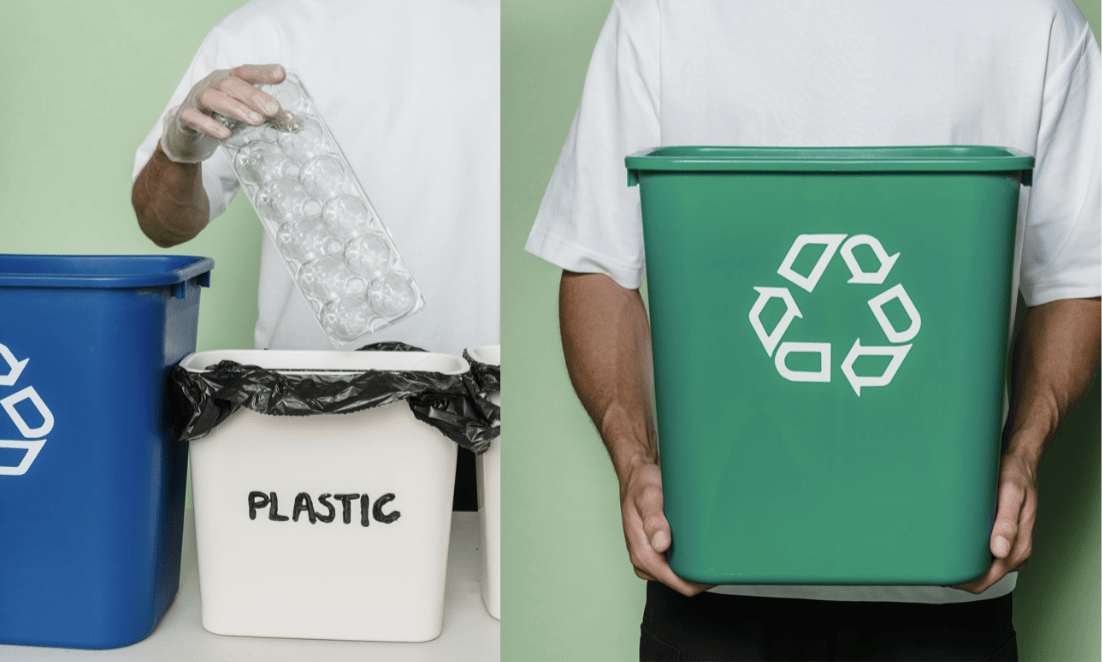
As per EPA, recycling has become one of the major components of solid waste management, accounting for 32% of all US municipal solid waste.[2] In the waste hierarchy established under Resource Conservation and Recovery Act (RCRA), recycling is preferred over incineration and landfilling.[3]
MEANING
Defining RHRF
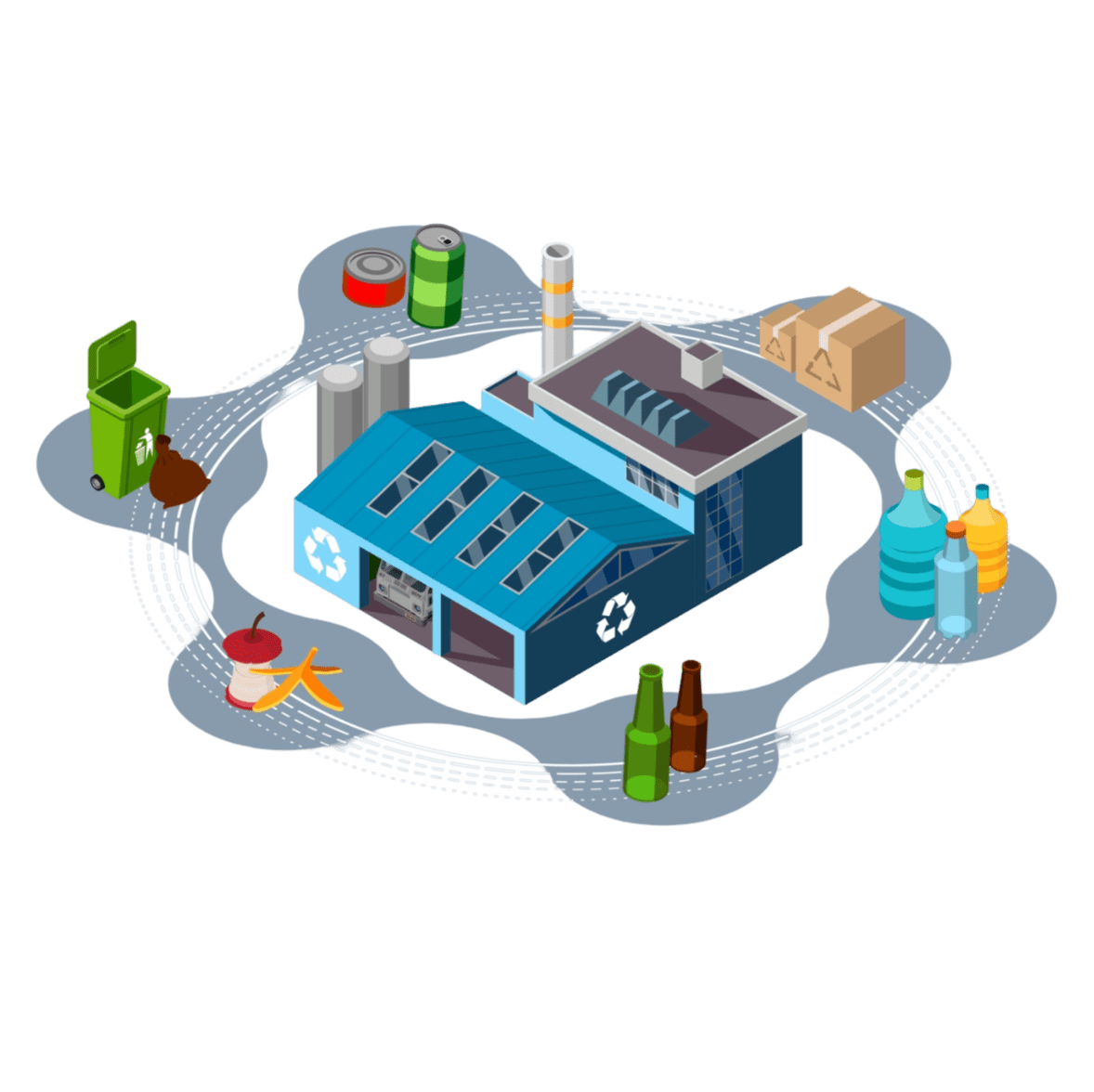
A Recyclables Handling and Recovery Facility (RHRF) is a plant that segregates recyclable materials using advanced machinery, the product is then sold to end buyers.[4,5] These RHRFs sort a wide variety of recyclable materials such as, but not limited to, mixed paper, old newsprint (ONP), office paper, and old corrugated containers (OCC), plastics, aluminum/steel cans, glass bottles, etc.[6] RHRFs combine mechanical and manual processes to segregate recyclable materials. Important design factors to maximize RHRF efficiency include increased material flow rates, reduced residues, minimized human labor, increased labor safety, production of higher quality outputs, and minimized overall processing costs.[7]
PROCEDURE
How RHRFs Work?
1
Collection & Transportation
Recyclable materials are collected and then delivered to the RHRF.
Preliminary Sorting
Manual sorters remove large contaminants.
2
3
Automated Sorting
Mechanical systems like drum feeder, conveyor lines, air classification to segregate materials.
Magnetic Sorting & Eddy Currents
Separate ferrous and non-ferrous metals.
4
5
Optical Sorting
Identify and sort materials based on shape, size and color.
Baling
Sorted materials compacted and sent for remanufacturing.
6
VALUE
Benefits of RHRFs
Diversion of Waste from Landfills
Waste diverted from combustion and disposal.
Energy Saving
Recycling uses less energy in comparison to manufacturing new products from scratch.
Pollution Reduction
Reduced greenhouse gas emissions caused by disposing of
materials that could be diverted from the waste stream and potentially recycled.
Employment Generation
Creates job opportunities in the recycling sector.
Promotes Sustainability
Supports a circular economy by reusing products rather than disposing them.
Supports Local Environmental Efforts
Creates environmental awareness and promotes responsible consumer practices.
References
- Manfredi, S., & Pant, R. (2013). Improving the environmental performance of bio-waste management with life cycle thinking (LCT) and life cycle assessment (LCA). International Journal of Life Cycle Assessment, 18(1), 285–291.
- Environmental Protection Agency (EPA). (2020). Advancing sustainable materials management: 2018 fact sheet assessing trends in materials generation and management in the United States.
- Van Ewijk, S., & Stegemann, J. A. (2016). Limitations of the waste hierarchy for achieving absolute reductions in material throughput. Journal of Cleaner Production, 132, 122–128.
- Pressley, P. N., Levis, J. W., Damgaard, A., Barlaz, M. A., & DeCarolis, J. F. (2015). Analysis of material recovery facilities for use in life-cycle assessment. Waste Management, 35, 307–317.
- Chertow, M., Reck, B. K., Wrzesniewski, A., & Calli, B. (2024). Outlook on the future role of robots and AI in material recovery facilities: Implications for U.S. recycling and the workforce. Journal of Cleaner Production, 470, 143234.
- Leahy, M. (2023, July 25). What is a materials recovery facility (MRF)? Rubicon. Retrieved from https://www.rubicon.com/blog/materials-recovery-facility/
- Kessler Consulting. (2009, September). Materials Recovery Facility Technology Review. Retrieved from https://www.nswai.org/docs/MATERIALS RECOVERY FACILITY TECHONOLOGY REVIEW.pdf
- www.freepik.com
Disclaimer
Funding for this research was provided through the New York State Environmental Protection Fund as administered by the New York State
Department of Environmental Conservation through a Memorandum of Understanding (MOU) with Stony Brook University (AM 11643) effective September 11, 2019, and renewed on September 4, 2024.
The opinions, findings, and interpretations of data contained therein are the responsibility of the University and do not necessarily represent the opinions, interpretations, or policy of the New York State Department of Environmental Conservation.